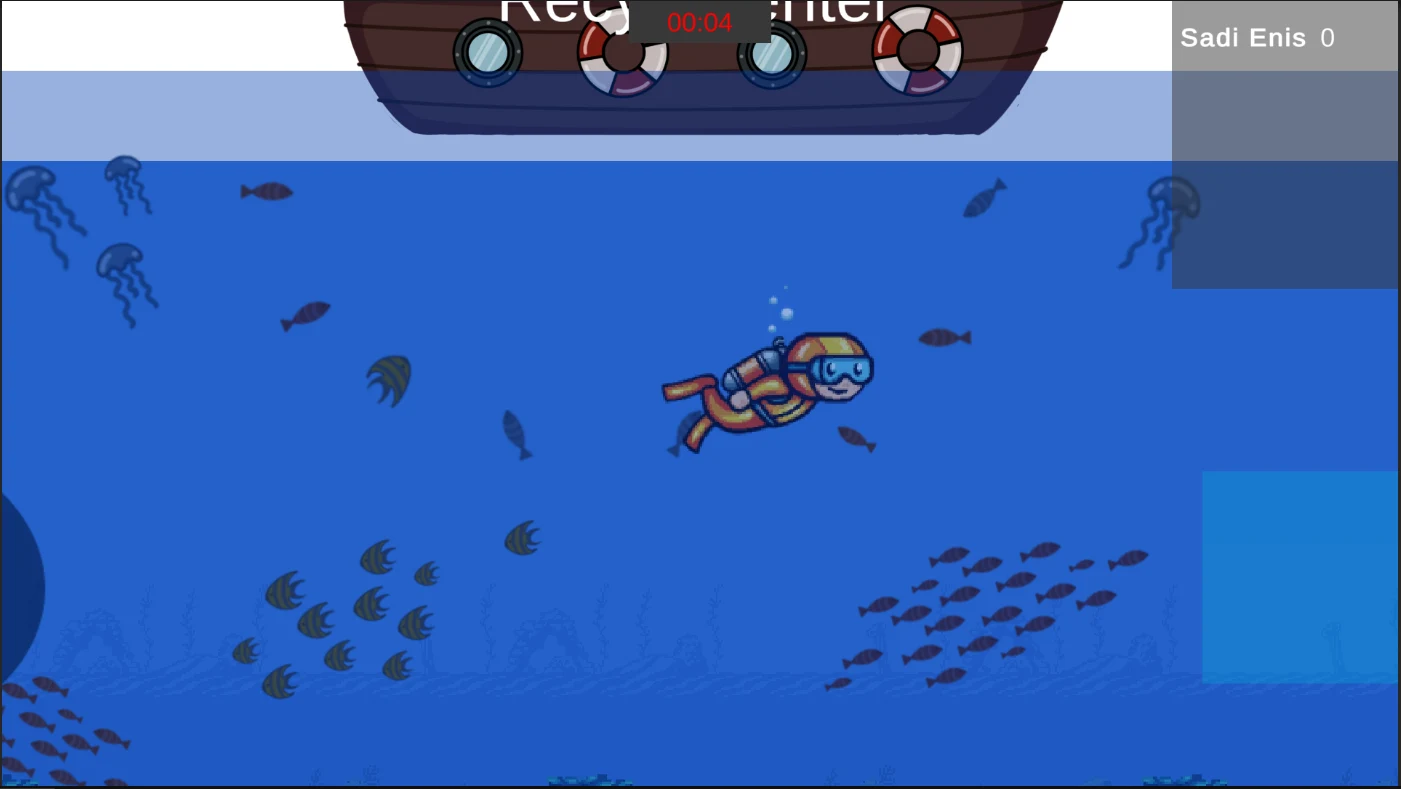
Collect the litter
Explore the underwater environment and collect plastic bottles and other waste.
 cleanoceans.
ONE GAME. A SHARED FUTURE.
Protecting our seas starts with working together. CleanOceans is a 2D online cooperative game that brings ocean cleanup and teamwork into one shared adventure.

COP31 / PROJECT SHOWCASE
Our project brings ocean protection and cooperation into play. CleanOceans will be showcased in the shared screen area at COP31.
Türkiye time · UTC+3
01 / THE STARTING POINT
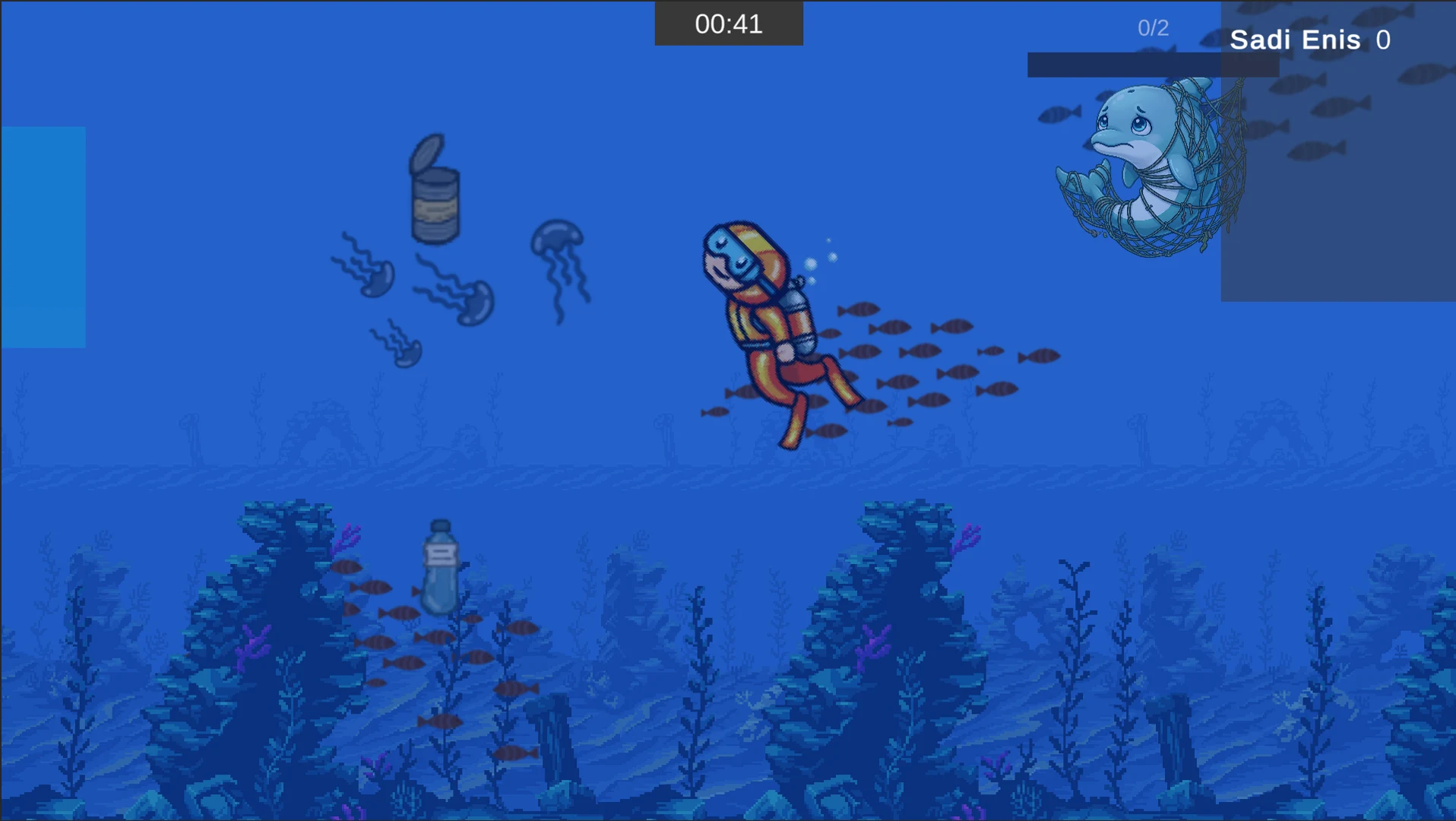
A plastic bottle in the sea. An abandoned net. An animal that needs help. CleanOceans turns marine pollution into an experience where players encounter a problem and take action.
Designed for children aged 6–15, the project aims to encourage environmental awareness through play and offer educators an interactive learning experience.
02 / BELOW THE SURFACE
Short sessions. A clear purpose. Collect marine litter, bring it to the recycling point and support your team.
Explore the underwater environment and collect plastic bottles and other waste.
Deliver collected waste to the recycling point, earn points and find your next target.
Revive a teammate who needs help. Work together towards a shared goal.
03 / SUSTAINABILITY
CleanOceans brings Life Below Water and Partnerships for the Goals into the project’s environmental and social focus. Waste collection, marine animal rescue and mutual support connect these goals to the player’s experience.
SDGs 14 and 17: environmental awareness and shared responsibility.
SUSTAINABLE DEVELOPMENT GOALS
CleanOceans explores marine pollution and the protection of marine life through tasks players actively take part in. It aims to encourage care for underwater life through play.
Players collect marine litter and carry it to the recycling point. Cleanup forms the core gameplay loop.
Rescuing animals trapped in nets draws attention to the living creatures affected by pollution, as well as the waste itself.
The project aims to introduce children to protecting marine ecosystems in an interactive environment.

CleanOceans connects the idea of working towards a shared purpose with solidarity in play. Cooperation is built through actions where players need one another.
1–4 players clean the same marine environment, with opportunities to divide tasks and coordinate collection and delivery.
Rescuing a marine animal takes two players. Reviving an incapacitated teammate also encourages mutual support.
Exploring the project with educators and using it in awareness activities are opportunities for future collaboration.